Review Polyverse Supermodal
I’ve been following Polyverse for years, and I genuinely value their approach to plugin design. Their tools usually feel fresh, modern, and conceptually different from the typical “one more effect” releases. They tend to take familiar ideas and push them into new creative territory, which is exactly what I’m looking for in sound design tools.
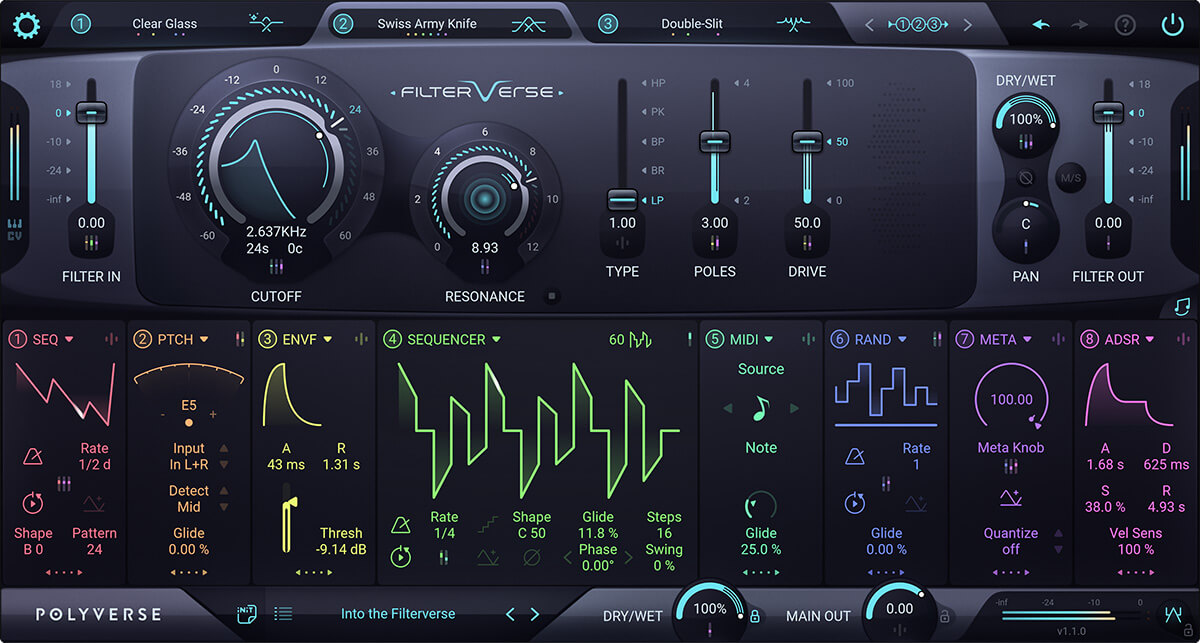
Supermodal was released before Filterverse, and in many ways, it already laid the groundwork for Polyverse’s direction when it comes to creative, performance-oriented effects. Filterverse later became a fixed part of my sound design workflow and is one of the tools I regularly come back to. With Supermodal, Polyverse explored a different concept early on, focusing on resonant filtering and physical modelling ideas. This review looks at how well Supermodal holds up today and how relevant it still is for modern sound design work.
Overview
I’ve tested a lot of creative filter plugins over the years, and most of them fall into two categories: either technically solid but uninspiring, or creative but hard to control in real productions. Supermodal sits in a rare middle ground. It is genuinely inspiring, deep enough for serious sound design, but still fast and intuitive to use in everyday workflows.
What surprised me most is how musical the results stay, even when pushing things hard. It genuinely feels like a fresh concept instead of just another variation of ideas we’ve seen a hundred times before.
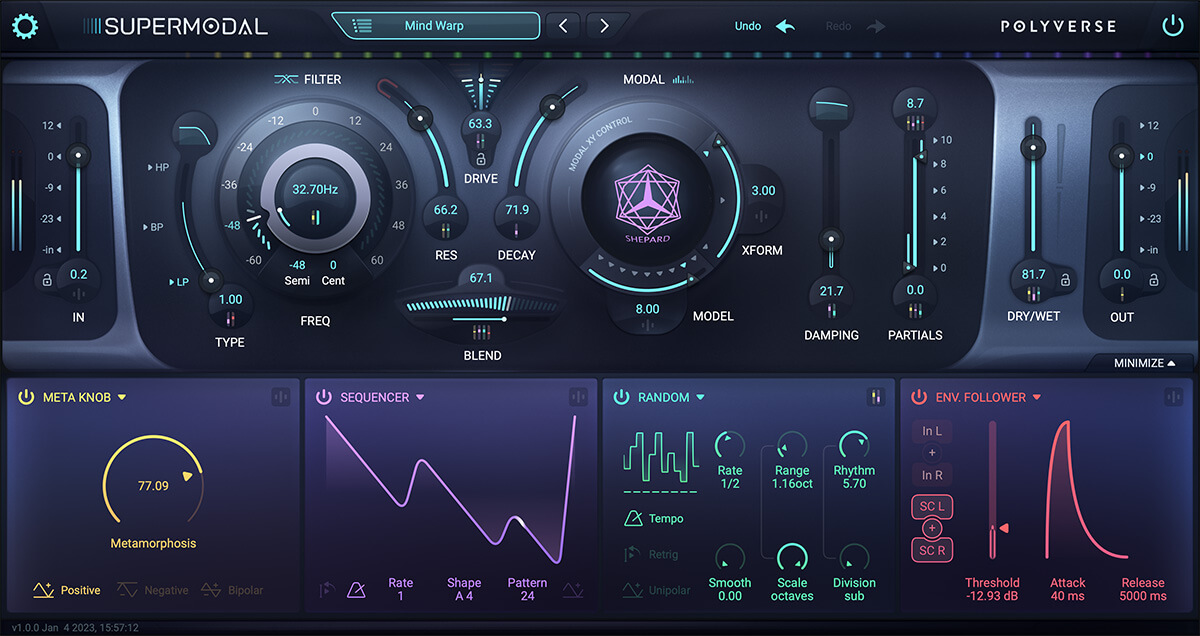
At its core, Supermodal is more than a filter. It combines a classic state-variable filter with a true modal resonator engine. The modal section is built from hundreds of tuned bandpass filters that recreate the resonant behaviour of physical objects and abstract models. This gives the plugin a very physical, almost acoustic quality, even when processing purely synthetic material. Drums can turn into pitched textures, pads become animated and cinematic, and simple one-shots can suddenly feel melodic.
Modulation & Sound Design Depth
From a sound designer’s perspective, the modulation system is one of Supermodal’s biggest strengths. Almost every parameter can be modulated, and you can combine multiple modulation sources at the same time. Sequencers, envelopes, random generators, macros and MIDI control are all available, and the routing feels immediate and visual.
This encourages experimentation without losing control. Rhythmic modulation keeps results musical, while subtle modulation adds movement and life to static sounds. For evolving textures, animated pads, rhythmic basslines and moving drum loops, Supermodal behaves more like a playable instrument than a static effect.
Sound Character & Creative Potential
Supermodal’s modal resonator engine is what sets it apart from standard filters. By morphing between 27 different modal models, you can move from subtle harmonic colouring to extreme timbral transformation. Some models feel musical and organic, others are abstract and experimental. The transitions between models are smooth and usable, which makes sound exploration feel natural instead of random.
The sound character has a clear physical modelling flavour. Certain timbres can remind you of physical modelling synths as e.g. Chromaphone, but Supermodal goes further because it lets you apply these resonant characteristics to any audio source. This makes it especially powerful for creative re-synthesis and texture design.
Even the classic filter section on its own sounds brutally good. The self-resonating behaviour is rich, stable, and musical, and you can push it hard without it falling apart or sounding cheap. The modal filter, however, is where Supermodal really sets itself apart from standard creative filters and becomes a serious sound design instrument.




Use in Electronic Music – Psytrance in particular
For electronic music, and psytrance in particular, Supermodal is a perfect fit. Psytrance relies heavily on evolving resonances, animated timbres and controlled movement, and this is exactly where Supermodal shines. It can turn simple loops into rhythmic, melodic structures and gives basses, leads and effects a more organic, almost “played” character.
In practice, this means you can take very basic material and quickly turn it into something that feels alive and complex, without losing clarity in a mix. The combination of resonance and modulation works especially well for transitions, FX design and moving textures in psytrance and other modern electronic styles.
Presets & Workflow
The preset library is large and well curated, with a good balance between extreme sound design and practical, musical starting points. Many presets already include rhythmic movement, which keeps results inspiring but still usable in real tracks.
I honestly love the GUI. The interface feels modern, clean and well thought out, and the animated elements are not just eye candy but actually help to understand what is going on. It looks great, but more importantly, it supports fast, focused work instead of getting in the way.
Visual modulation feedback helps to understand what is moving what, and small workflow details like locking levels across presets prevent annoying volume jumps when browsing sounds.
Verdict & Summary
Supermodal is a powerful creative filter and resonator that combines modern sound, physical modelling and deep modulation in a way that remains practical for real productions. It delivers inspiring results with a high level of control and sound quality, working equally well for subtle enhancement and radical sound design.
For me, it is the perfect complement to Filterverse, which I use constantly and which has become one of my favourite creative tools in daily sound design work.
Polyverse consistently stands for innovation, and Supermodal is another good example of that. Instead of releasing just another filter plugin that barely differs from dozens of existing tools, they create modern effects with their own identity and a clear creative focus. That is something I genuinely appreciate, and it is why their plugins keep surprising me in a positive way.
Supermodal clearly earns the SOR Award and stands out as one of the strongest creative filter tools available today, especially for electronic music and psytrance sound design.

Visit my BLOG for other vst recommendations, production tips and more!
Cheers,
Oliver Schmitt aka Sounds of Revolution (SOR)